EN


The strategic guide to Digital Product Passport: Improving traceability and sustainability
Connect your product information, from raw material sourcing to end-of-life management, with a clearer view of every stage.
- Understand your product data
- Connect the product lifecycle
- Prepare your business
As businesses increasingly focus on product transparency, sustainability and responsible sourcing, reliable product information has become essential.
A Digital Product Passport (DPP) provides a structured way to organise and share product data throughout its lifecycle. It helps manufacturers, suppliers, retailers and customers access relevant information and understand a product more clearly.
Bring important product details into one connected digital record, making information easier to find, share and use.
01 / The essentials
What information does a Digital Product Passport include?
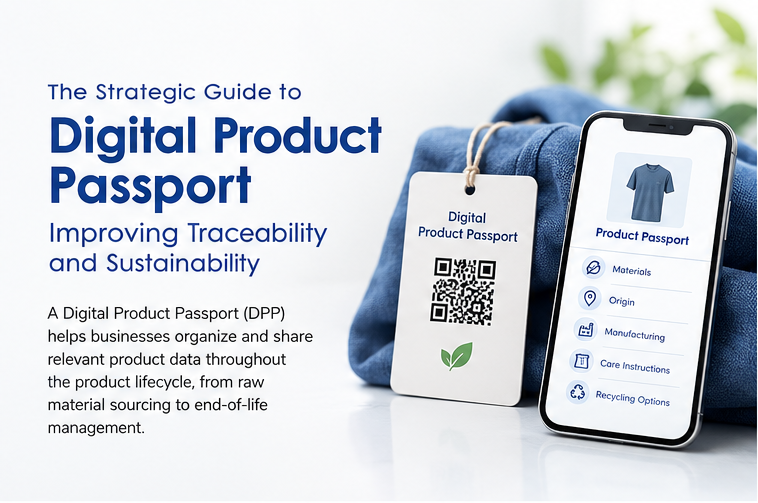
A product passport is a digital record containing relevant information about a product, including its materials, origin, manufacturing processes, care instructions and recycling options. People can access this information through a QR code or another suitable digital data carrier.
By bringing these details into one organised system, businesses can improve visibility, support informed decisions and strengthen supply chain transparency.
The information included depends on the product category, business needs and applicable requirements.
02 / The business value
Key benefits of Digital Product Passports
A well-managed DPP system can make product information more useful across your business and supply chain.
-
Improved traceability
Track product information across different stages of the supply chain, from sourcing to end-of-life management.
-
Greater transparency
Share relevant product information with customers and stakeholders so they can make better-informed decisions.
-
Sustainability support
Organise information about materials, durability, reuse and recycling to support responsible product management.
-
Compliance readiness
Prepare reliable product data to support the regulatory requirements that apply to your products and markets.
-
More efficient data management
Reduce reliance on disconnected records and make relevant product information easier for the right people to access.
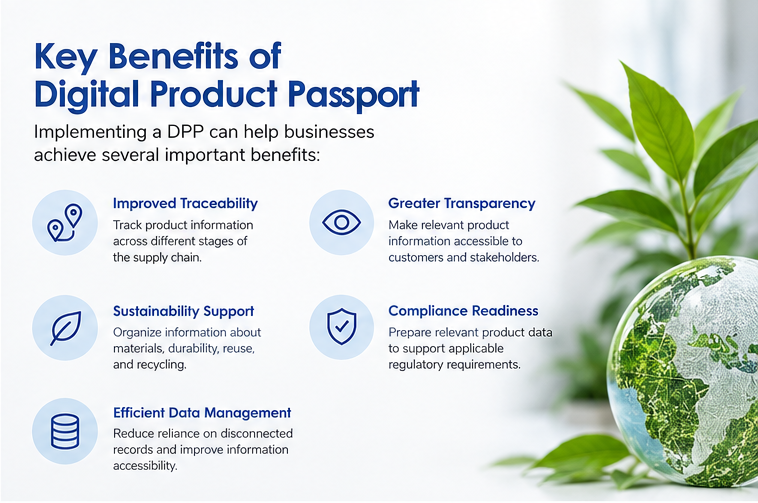
These capabilities help businesses manage product information more effectively while supporting responsible sourcing and sustainable business practices.
03 / The connected lifecycle
How does a DPP support the product lifecycle?
Digital product traceability connects relevant information across six key stages, helping useful records stay connected to the product.
-
Design and development
Record product specifications and material details.
-
Raw material sourcing
Organise supplier and sourcing information.
-
Manufacturing
Maintain production and quality records.
-
Distribution and retail
Support information sharing throughout the supply chain.
-
Use and maintenance
Provide care, maintenance and repair guidance.
-
End of life and recycling
Support reuse and responsible material recovery.
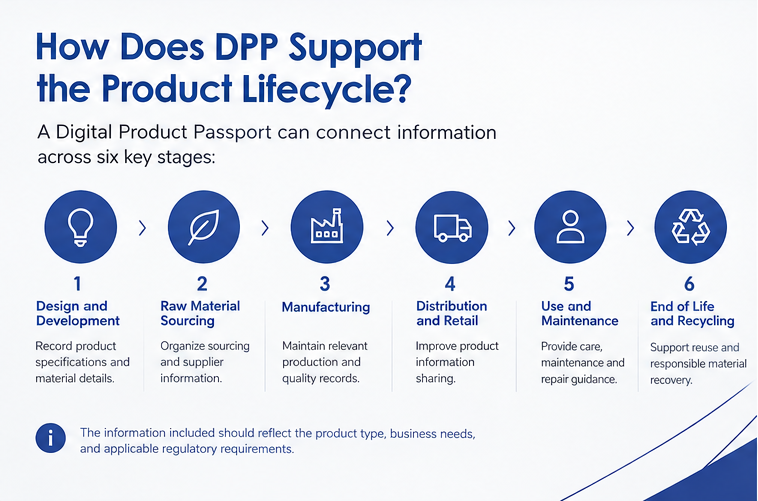
The information required at each stage depends on the product category, business needs and applicable regulatory requirements.
04 / From planning to practice
Preparing your business for DPP implementation
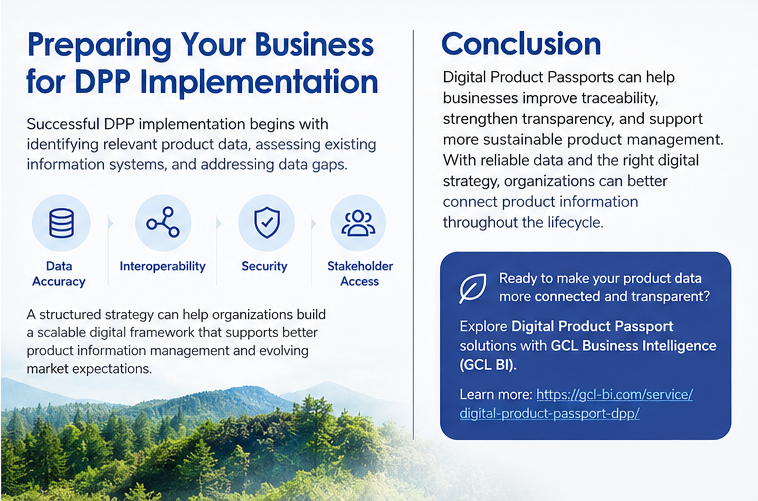
Successful implementation starts with identifying relevant product data, assessing existing information systems and addressing gaps. Four areas deserve particular attention:
-
Data accuracy
Review your product records and supporting evidence. Agree who will keep the information up to date.
-
Interoperability
Assess how information will move between your existing systems and the partners who need to share it.
-
Security
Consider how product records and supporting documents will be stored, protected and maintained.
-
Stakeholder access
Decide which information customers, suppliers and internal teams need, and who can view or update it.
A clear digital strategy helps organisations improve product traceability, strengthen supply chain transparency and prepare for evolving market expectations. Reliable data practices also support more efficient information management.
05 / Common questions
A few things you may be wondering
Is a Digital Product Passport the same as a QR code?
No. The passport is the digital product record. A QR code is one way to connect a physical product to that record so people can access the information.
What information should we collect first?
Start with product identity, materials, supplier and manufacturing details, and care and recycling guidance. Review the records you already hold, then identify gaps based on your products, business needs and applicable requirements.
Who can benefit from product passport information?
Manufacturers, suppliers, retailers and customers can use relevant product information to support traceability and informed decisions. Plan access around the information each group needs.
06 / Your next step
Better product information. More informed decisions.
A Digital Product Passport can help businesses connect product information, improve traceability and support more sustainable product management. With reliable data and an effective digital strategy, organisations can strengthen transparency throughout the product lifecycle.
Digital Product Passports with GCL BI
Make your product data more connected and transparent.
Explore Digital Product Passport solutions with GCL Business Intelligence and take the next step towards clearer product information.
Already registered? Access your account to manage your product information.